The global automotive manufacturing industry is undergoing a monumental transformation driven by rapid technological innovation, electrification, and evolving consumer demands. To remain competitive in a fast-paced global market, original equipment manufacturers and component suppliers are increasingly adopting advanced production techniques. Modern manufacturing technologies—ranging from precision additive manufacturing and automated robotics to computer-integrated machining—allow automotive producers to build lighter, safer, and more fuel-efficient vehicles while dramatically streamlining factory operations and reducing costly production delays.
Accelerating Rapid Prototyping and Vehicle Development Cycles
Bringing a new vehicle model from concept sketch to commercial production historically required years of iterative design, expensive tooling creation, and manual prototype testing. Advanced production techniques have compressed these development timelines significantly, allowing automakers to bring innovative concepts to market in record time.
High-precision additive manufacturing and computer-controlled machining enable engineering teams to fabricate functional prototype parts directly from digital CAD models within hours rather than months. Designers can evaluate aerodynamic profiles, test structural tolerances, and verify ergonomic fits rapidly, making critical design adjustments early in the engineering phase before investing in mass-production tooling.
Furthermore, rapid prototyping mitigates financial risk during new vehicle launches. By accelerating iterative design testing, automotive companies identify potential structural flaws and assembly friction points early, preventing costly tooling re-designs and unexpected recall risks later in the manufacturing cycle.
Streamlining CAD-to-Part Digital Workflows
Direct digital manufacturing transfers complex CAD data straight to automated fabrication machinery, eliminating manual layout steps and human calculation errors.
Seamless digital conversion accelerates prototype production, enabling engineers to test multiple design iterations simultaneously. Digital workflows optimize engineering agility.
Minimizing Pre-Production Tooling Investments
Fabricating prototype components using flexible machining platforms reduces the need for expensive, single-purpose temporary stamping dies during initial testing phases.
Lowering upfront tooling expenses allows manufacturers to experiment with bold vehicle designs without risking major capital investments. Flexible prototyping protects development budgets.
Precision Machining for Lightweight Complex Components
As the automotive sector shifts rapidly toward electric powertrains and stringent fuel-efficiency standards, reducing overall vehicle weight without compromising passenger safety has become a paramount engineering objective. Advanced manufacturing methods allow automakers to utilize lightweight alloys—such as structural aluminum, titanium, and carbon-fiber composites—that were previously difficult to machine economically.
Utilizing specialized 5-axis CNC machining services enables component fabricators to produce intricate engine blocks, suspension knuckles, and battery housing units with ultra-tight dimensional tolerances. Multi-axis machining rotates cutting tools along multiple axes simultaneously, allowing complex organic geometries to be machined in a single setup.
Eliminating multiple machinery setups reduces manufacturing cumulative error stack-up, guaranteeing that engine, transmission, and drivetrain parts fit together with microscopic precision. High-precision manufacturing maximizes powertrain efficiency, minimizes mechanical friction, and extends vehicle operating lifespans substantially.
Machining Complex Geometries in Single Workholding Setups
Multi-axis cutting heads maneuver smoothly around intricate workpieces, machining angled holes and complex contours without requiring manual re-clamping.
Single-setup manufacturing maintains absolute spatial accuracy across geometric features, drastically lowering component rejection rates. Continuous multi-axis machining ensures dimensional consistency.
Optimizing Lightweight Aluminum and Magnesium Structural Parts
Advanced high-speed cutting tools carve away excess material from solid metal billets, creating high-strength structural parts featuring internal weight-reduction pockets.
Reducing unsprung vehicle weight enhances battery range for electric vehicles while improving handling performance. Precision weight reduction elevates vehicle efficiency.
Enhancing Automation with Smart Industrial Robotics
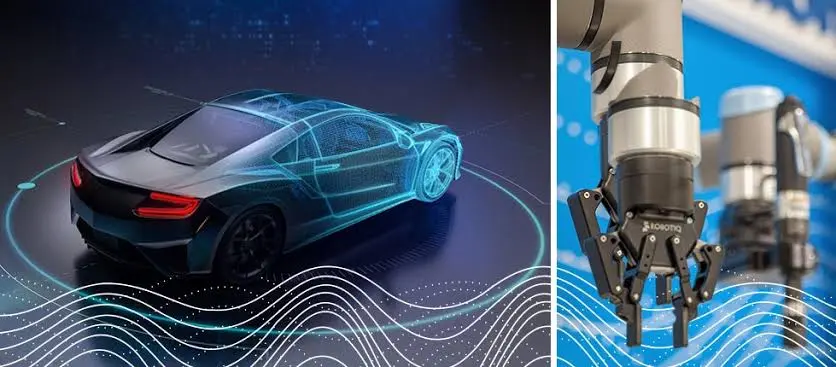
Modern automotive assembly plants represent the pinnacle of industrial automation, utilizing advanced robotics and artificial intelligence to execute complex manufacturing tasks with unwavering consistency. Automated robotic arms now handle welding, precision painting, sealant application, and heavy component placement effortlessly across high-speed assembly lines.
Integrating machine vision systems and force-sensing grippers allows industrial robots to perform delicate assembly operations—such as installing windshield glass or aligning electric motor stators—with microscopic accuracy. Vision-guided robots continuously measure assembly gaps, adjusting placement trajectories in real time to ensure flawless body panel alignment.
Furthermore, automated robotic cells protect human workers from dangerous, repetitive, or ergonomically taxing tasks, such as heavy lifting and high-temperature spot welding. Transferring high-risk duties to automated systems drastically lowers workplace injury rates while maintaining round-the-clock factory productivity.
Implementing Vision-Guided Laser Welding Cells
Robotic laser welding systems track body panel seams dynamically, applying precise structural welds that outperform traditional spot welds in strength and seam appearance.
Automated laser welding creates rigid, lightweight chassis structures that absorb crash energy superiorly. Vision-guided welding elevates structural safety.
Deploying Collaborative Robots alongside Human Assembly Teams
Compact collaborative robots work directly alongside human technicians, handling tools, applying adhesives, and holding heavy parts during cabin interior installations.
Combining human problem-solving agility with robotic repeatability maximizes line efficiency and reduces physical operator fatigue. Collaborative assembly optimizes workforce productivity.
Optimizing Supply Chains with Additive Manufacturing and On-Demand Parts
Automotive supply chains are famously intricate, relying on thousands of specialized components sourced from global vendor networks. Disruption at any single supply point can halt entire assembly lines, causing catastrophic operational losses. Advanced production techniques build resilience into automotive supply networks through localized, on-demand manufacturing.
Industrial 3D printing and digital inventory management allow automakers to print low-volume replacement parts, specialized assembly jigs, and custom assembly line fixtures directly on site. Instead of storing massive physical inventories of legacy spare parts in warehouses, manufacturers store digital design files, printing spare components only when customer orders arrive.
Additionally, additive manufacturing excels at tool-and-die production. Fabricating custom assembly jigs featuring internal conformal cooling channels improves plastic injection molding times, allowing tier-one suppliers to churn out dashboard panels and trim pieces significantly faster.
Consolidating Multi-Part Assemblies into Monolithic Designs
Additive manufacturing allows engineers to combine complex assemblies of dozens of individual stamped metal pieces into a single 3D-printed component.
Eliminating fasteners and welded joints reduces assembly labor, minimizes component failure points, and lightens overall vehicle weight. Component consolidation simplifies factory assembly lines.
Fabricating On-Demand Assembly Tooling and Custom Fixtures
3D printing customized ergonomic assembly grips overnight ensures factory workers receive tailored tools that speed up line operations instantly.
Localizing tool production eliminates vendor shipping delays, keeping production lines moving smoothly during unexpected tooling wear events. On-demand tooling secures production continuity.
Implementing Predictive Maintenance and Quality Control Telemetry
The integration of Industrial Internet of Things sensors and real-time data analytics has revolutionized quality control and machinery maintenance across modern automotive manufacturing plants. Intelligent monitoring systems transform static production lines into self-correcting, adaptive manufacturing networks.
In-line laser scanners and optical coordinate measuring systems inspect body panels and engine components directly on active conveyor lines, verifying dimensions against digital blueprints within milliseconds. Identifying out-of-tolerance parts instantly prevents defective components from moving further down the assembly line, eliminating compounding scrap costs.
Simultaneously, predictive maintenance sensors monitor vibration, temperature, and power consumption across critical factory machinery. Machine-learning algorithms analyze sensor data to detect subtle mechanical wear before equipment breaks down, allowing maintenance crews to replace worn bearings during planned shift breaks rather than suffering sudden, costly line shutdowns.
Detecting Dimensional Deviations with In-Line Laser Inspection
Automated optical scanners measure thousands of surface points per second on passing vehicle frames, flagging microscopic panel misalignments instantly.
Immediate automated defect detection stops non-conforming parts from reaching painting or final assembly bays, protecting overall build quality. In-line scanning guarantees product excellence.
Harnessing Predictive Analytics to Eliminate Unplanned Downtime
Vibration sensors attached to high-speed spindle motors detect microscopic bearing degradation weeks before mechanical failure occurs.
Scheduling maintenance during non-production hours keeps factory lines operating at peak capacity without costly emergency interruptions. Predictive monitoring maximizes plant output.
Sustainable Manufacturing and Material Waste Reduction
Modern automotive manufacturers face growing regulatory and public pressure to reduce carbon footprints, minimize material waste, and adopt sustainable circular economy principles across production facilities. Advanced manufacturing techniques play a vital role in achieving aggressive corporate sustainability targets.
Advanced subtractive and additive fabrication processes optimize material utilization, drastically reducing scrap metal generation. Computer-aided nesting algorithms arrange component cutouts on sheet metal coils with maximum spatial efficiency, ensuring raw material waste is kept to an absolute minimum during stamping operations.
Furthermore, modern dry-machining and minimum-quantity lubrication technologies replace traditional flood coolant systems with precise micro-droplet oil mists. Eliminating massive liquid coolant reservoirs reduces hazardous waste disposal requirements, lowers factory energy usage, and creates a cleaner, safer work environment for machine operators.
Maximizing Material Yields with Advanced Nesting Software
Intelligent CAD nesting software calculates optimal layout patterns for stamped body panels, extracting maximum usable parts per metal sheet.
Minimizing raw metal scrap lowers material procurement costs while reducing energy-intensive scrap recycling requirements. Intelligent nesting drives resource efficiency.
Implementing Minimum Quantity Lubrication in Machining
Delivering microscopic oil droplets directly to cutting tool tips provides necessary lubrication while keeping metal chips dry and easily recyclable.
Eliminating heavy chemical coolant flushes reduces environmental waste treatment costs and lowers factory energy consumption significantly. Eco-friendly lubrication supports sustainable manufacturing.
Conclusion
Advanced production techniques have become indispensable drivers of success in the modern automotive manufacturing landscape. By accelerating prototyping timelines, enabling high-precision lightweight component fabrication, deploying intelligent industrial robotics, localizing supply chains through additive manufacturing, automating quality control telemetry, and minimizing environmental waste, automotive producers achieve unprecedented operational performance. Embracing these cutting-edge manufacturing methodologies empowers automakers to navigate complex industry shifts effortlessly, producing safer, lighter, more efficient, and higher-quality vehicles that define the future of global transportation.
Also Read
- How can you compare roofing companies before hiring one?
- Which Design Choices Add the Most Value to a Custom Home?
- Turning Awkward Spaces Into Something More Useful