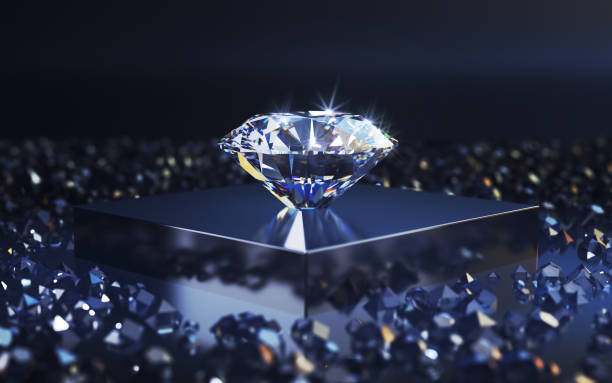
Ask someone in one part of the world what a diamond means, and you’ll likely hear a story about love and commitment. Ask someone from a different cultural background and the answer may centre on security, status or family legacy instead. A diamond doesn’t carry one fixed meaning; it absorbs the values of whoever is holding it, which is why the same small stone can mean such different things depending on where you’re standing.
A Western Symbol Built Around Romance
In much of the Western world, the diamond has become almost inseparable from romantic commitment, largely thanks to twentieth century marketing that linked the stone directly to engagement and enduring love. That association is now so deeply embedded that many assume it’s simply how things have always been done, even though the diamond’s role in courtship is far newer than the stone’s own history.
Wealth, Security and the Next Generation
In many South Asian households, diamonds and gold jewellery serve a different, more practical purpose alongside their beauty. They function as a portable form of wealth, something passed down, sold in hard times or gifted at key family milestones. A diamond here isn’t only decorative; it’s a form of financial security, chosen with future generations in mind rather than one romantic occasion.
Status, Celebration and Quiet Confidence
Elsewhere, particularly across parts of East Asia and the Gulf region, diamonds are more closely tied to status and celebration. Clarity and size often carry social weight, signalling achievement or taste rather than romantic intent specifically. A diamond gifted here might mark a business milestone, a graduation or simply the confidence of arrival, rather than a proposal.
A Stone That Reflects Back Whatever You Bring to It
What ties these meanings together is that none of them is wrong. A diamond doesn’t insist on one interpretation; it reflects whatever significance the people around it choose to place on it, which is part of why diamonds have travelled so well across cultures, adapting to local customs rather than replacing them.
It also shows up in how diamonds are physically presented. Some traditions favour a single, dominant stone as the clear centre of attention, while others lean toward diamond pairs set symmetrically into earrings or bracelets, doubling the sense of balance and completeness the jewellery is meant to represent. Neither approach is more correct than the other; they simply reflect different ideas about what a diamond is meant to say.
Why That Variety Is Worth Appreciating
There’s something genuinely uplifting about an object that can mean romance in one home and generational security in another, status in one culture and quiet sentiment in the next. It suggests the diamond has never really belonged to one tradition alone. Instead, people who wear it, gift it, and pass it down have continually reshaped it, each generation layering its own meaning onto a stone that was, geologically speaking, indifferent to all of it long before any of these traditions existed. That adaptability may be the diamond’s most underrated quality, quietly outlasting every single story ever told about it.
Read more: https://punssmile.com/why-dentures-are-a-cost-effective-solution-for-missing-teeth/
https://punssmile.com/the-reverse-martingale-system-capitalizing-on-winning-streaks-safely/