Drying your hair might feel like a routine, almost mindless part of your day, but how you go about it can shape texture, moisture levels, breakage, and overall manageability over the long haul. Many people fixate on finding the right hair dryer, assuming the device alone determines how healthy their hair ends up looking. In reality, heat level, drying time, distance from the hair, tension from brushing, and how often you style all matter—often more than the tool itself. This article focuses on practical technique adjustments that can ease unnecessary stress on your hair without requiring you to abandon heat styling altogether. It’s also worth separating temporary cosmetic concerns, like frizz or surface roughness, from more persistent issues, such as ongoing breakage or noticeable thinning, which warrant closer attention.
Understand What Causes Hair Damage
The visible part of your hair, the shaft, is made primarily of keratin, a structural protein. Once this shaft sustains significant damage, it cannot repair itself biologically the way skin or other living tissue can. Damage typically stems from a mix of mechanical and thermal stress: high temperatures, prolonged heat exposure, repeated brushing or pulling, rough towel drying, and styling hair that’s already fragile or chemically treated. Wet hair is especially vulnerable, since it stretches more easily and breaks more readily during handling.
It helps to know the difference between breakage (snapped strands or visibly shorter pieces), hair shedding (hairs released naturally from the follicle as part of a normal growth cycle), and hair loss (reduced density or pattern changes that may call for professional evaluation). Conditioners and treatments can improve how hair feels and looks, but they won’t restore severely damaged strands to their original structure—so claims of full “repair” deserve some skepticism.
Prepare Hair Before Applying Heat
Before reaching for a heat tool, gently squeeze out excess water. Wrapping or blotting hair with a soft, absorbent towel beats vigorous rubbing, which roughens the hair’s outer layer. When it’s practical, letting hair partially air-dry cuts down on the time it needs to spend under heated air. Detangling should happen gradually, starting at the ends and working upward, ideally with a wide-tooth comb or another low-tension method suited to your hair type.
Take someone who habitually starts blow-drying the second they step out of the shower. By blotting hair thoroughly first and waiting a few minutes before turning on the heat, they can often shorten total drying time noticeably—cutting cumulative heat exposure without changing anything else about their routine.
Choose the Lowest Effective Heat
Higher heat isn’t automatically faster or more effective, especially if it leads to repeated passes over the same section. It’s generally wiser to start on a low or medium setting and only increase if truly necessary. Use the lowest effective heat setting. The goal is a controlled, comfortable temperature, not the maximum the tool can produce.
Hair density, length, texture, and chemical history all influence how much heat is appropriate. Fine, bleached, relaxed, or already-brittle hair typically calls for gentler handling, since excessive heat can contribute to dryness, roughness, split ends, and breakage across virtually every hair type.
Use Distance, Movement, and Sections to Limit Exposure
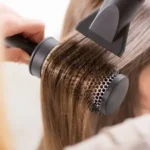
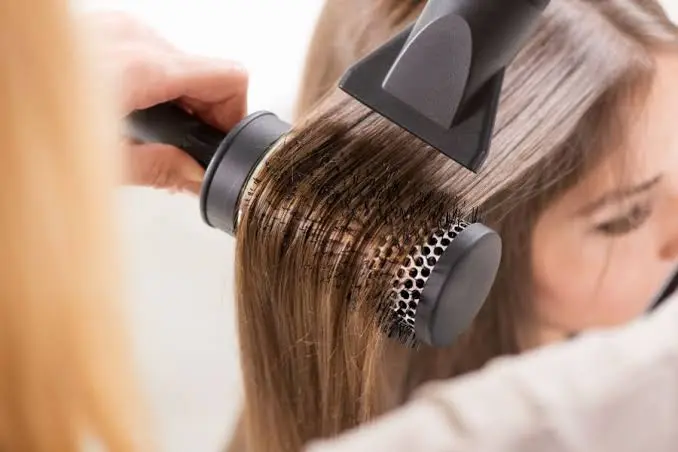
Holding airflow too close to one spot concentrates heat and raises the risk of damage. Keep your hair dryer moving continuously rather than lingering in one place, and divide thick or long hair into manageable sections. When smoothing is the goal, direct airflow along the hair shaft rather than randomly across it. Follow the manufacturer’s safety instructions regarding distance, and prioritize comfort—any sense of scalp heat or discomfort is a sign to adjust. Pulling hair taut with a brush while drying adds mechanical tension on top of thermal stress, compounding the potential for damage.
Technique check:
– Is the airflow moving?
– Does the scalp feel uncomfortably hot?
– Am I repeatedly drying the same area?
– Am I pulling the hair taut?
Consider Heat-Protective Products Carefully
Heat-protective products are designed to reduce friction, improve slip, and limit some effects of thermal exposure—but they don’t make unlimited high-heat styling safe. Follow label instructions on amount, application method, and whether the product is meant for wet or dry hair. Using too much can weigh hair down or lead to buildup. Be wary of absolute marketing claims like “zero damage” or “completely heat-proof,” which oversimplify how hair actually responds to heat.
Adapt the Routine to Different Hair Needs
No single method works for everyone. Fine or fragile hair generally benefits from lower heat and minimal tension; thick or dense hair needs careful sectioning and adequate airflow. Curly or coily hair often fares better with reduced manipulation and extra attention to tangling and shrinkage. Chemically treated hair may need less frequent heat exposure and closer monitoring for dryness. Frequent washing or an oily scalp shouldn’t be addressed by cranking up the heat, either. Texture alone doesn’t determine damage risk—condition, treatment history, and technique matter just as much.
Common Mistakes to Avoid
- Starting with maximum heat every time
- Holding heated airflow stationary
- Drying hair aggressively with a rough towel
- Brushing forcefully through tangles
- Applying heat repeatedly to already-dry sections
- Ignoring scalp discomfort or a burning smell
- Using damaged cords, plugs, or equipment
- Treating a heat protectant as permission for unlimited heat exposure
- Styling at high heat every day without breaks
These are common pitfalls rather than a complete safety checklist. Electrical equipment should always be kept away from water and used according to its specific safety instructions.
When to Seek Professional Advice
Occasional dryness or split ends are a different matter from persistent changes in hair density. Consult a dermatologist or qualified healthcare professional if you notice sudden or substantial shedding, bald patches, persistent scalp pain, itching, redness, or scaling, breakage that continues despite gentler care, or hair changes accompanied by other health symptoms. Hair appearance alone isn’t enough to go on for diagnosis. Styling adjustments may reduce avoidable damage, but they can’t address every underlying cause of hair loss.
A More Protective Drying Routine
- Gently remove excess water.
- Detangle with minimal pulling.
- Allow partial air-drying when possible.
- Apply an appropriate heat-protective product if desired.
- Use low or medium heat.
- Work in sections without concentrating airflow in one spot.
- Finish when hair is dry rather than continuing to heat it unnecessarily.
- Clean and inspect the equipment according to its instructions.
This sequence reduces avoidable stress—it doesn’t guarantee damage-free styling.
Small Technique Changes Can Make a Difference
Lower heat is usually safer than maximum heat. Keep heated airflow moving. Reduce mechanical tension on wet hair. Adjust your routine to your hair’s actual condition and texture, and treat persistent loss or scalp symptoms as a reason to seek professional advice. Rather than overhauling your entire routine overnight, try changing one factor at a time—lowering the temperature, blotting hair first, or easing up on tension—and see what difference it makes over time.
Also Read-What Makes a Mobile Browser Game Feel Like a Native App?