IDEK meaning in text is one of the most common abbreviations people use while chatting online. If you’ve seen it in messages or social media and wondered what it really stands for, you’re not alone. Understanding idek meaning in text can help you read conversations more clearly and respond confidently.
Many users type idek meaning in text to show uncertainty or confusion in a casual way. Knowing the true meaning of idek in text makes texting faster, funnier, and easier to relate to. In this article, we’ll break down everything you need to know about idek meaning in text so you never miss a beat while chatting.
What Does Idek Mean in Text & Chat?
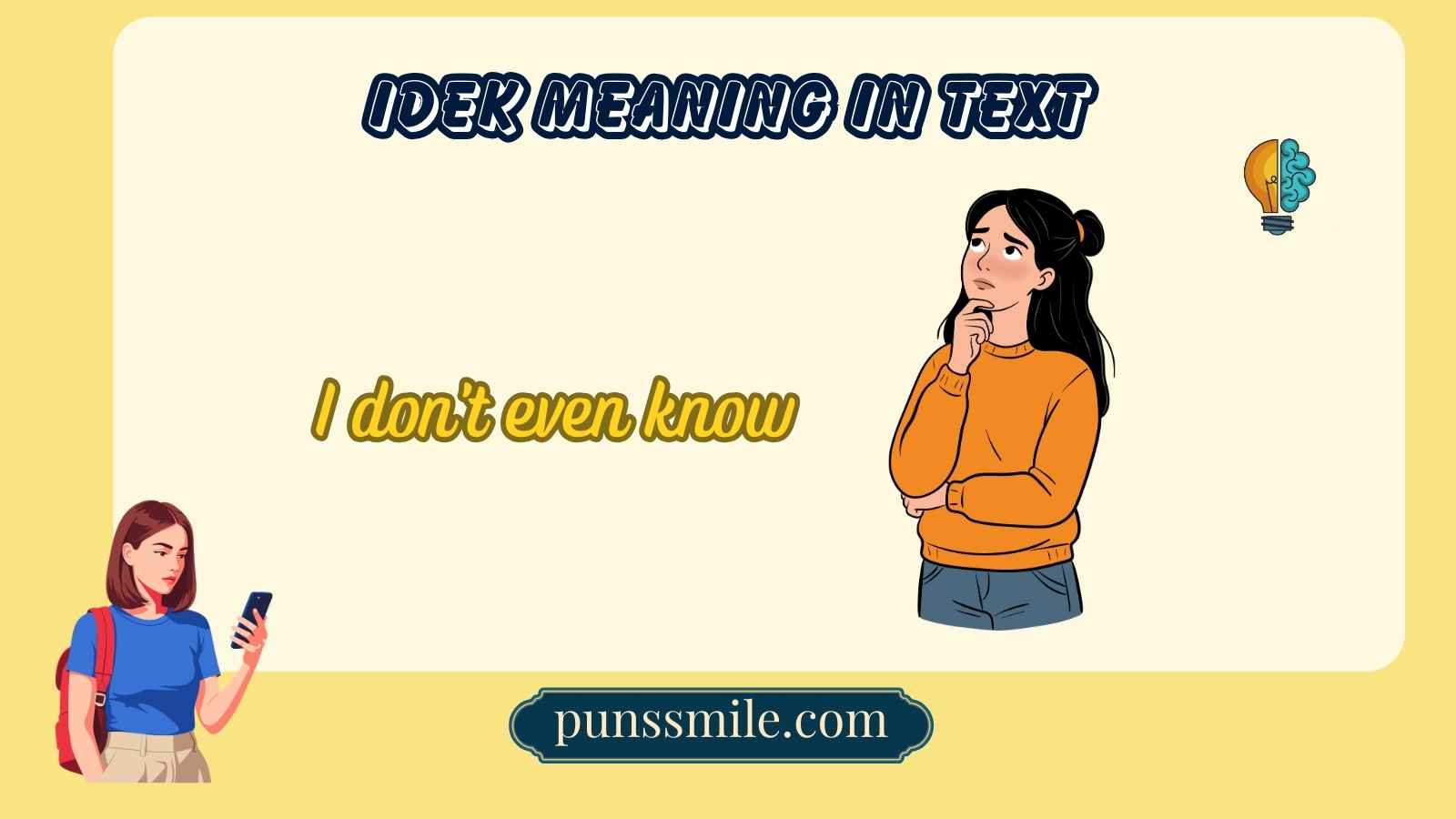
Idek is an abbreviation commonly used in texting and online messaging. It stands for “I don’t even know” and expresses confusion, uncertainty, or indifference. People often use it when they genuinely have no idea about something, or when they want to respond casually without giving a detailed explanation.
Quick Points:
- Stands for: I don’t even know
- Expresses: confusion, uncertainty, or casual dismissal
- Tone: informal, friendly, sometimes humorous
Example in Chat:
- Friend 1: “Are we going out tonight?”
- Friend 2: “idek 😅”
Full Form, Stands For & Short Meaning of Idek
The full form of idek is straightforward: I don’t even know. Unlike some slang that has multiple complicated meanings, idek is simple and versatile.
Short Meaning:
- Unsure / Confused
- Indifferent / Meh
- Non-committal response
Usage Tip: It works perfectly in informal texts or social media messages. Avoid using it in professional emails or formal writing.
Origin, History & First Known Use of Idek
Idek emerged in the early 2000s alongside the rise of instant messaging platforms like AOL Instant Messenger (AIM) and MSN Messenger. As texting grew more popular, people began shortening common phrases to save time.
Key Points:
- First used: Early 2000s in online chats
- Origin: Internet and texting culture
- Spread: Popularized on social media platforms like Instagram and TikTok
Over time, it became part of everyday texting slang, especially among teens and young adults.
How People Use Idek in Daily Conversations
In real-life digital chats, idek is often used to show uncertainty or shrug off a question without writing a long reply. It’s casual and relatable.
Examples:
- “What’s for dinner tonight?” → “idek 🤷”
- “Did you finish the homework?” → “idek lol”
- “Who’s coming to the party?” → “idek, ask Sarah”
People also use idek to lighten the mood or add humor to a conversation.
Idek Meaning Across WhatsApp, Instagram, TikTok & Snapchat
Different social platforms influence how slang is used:
- WhatsApp: Quick replies, often alone or with emojis.
- Instagram: Used in comments, captions, or DMs to show uncertainty casually.
- TikTok: Appears in captions or video text overlays to express confusion or irony.
- Snapchat: Short, casual responses to Snaps or chat messages.
Across all platforms, idek maintains its original meaning but adapts slightly to context and tone.
Different Meanings of Idek in Other Fields
While idek is primarily texting slang, occasionally it’s used in other informal settings:
- Gaming chats: Shows confusion or indecision about in-game strategies.
- Memes: Often paired with humorous or ironic content.
- Youth slang: Can indicate a carefree or indifferent attitude.
Despite these variations, it never strays far from its core meaning: I don’t even know.
Common Confusions, Mistakes & Wrong Interpretations
Because idek is informal, some people might misinterpret it:
- Mistake: Thinking it’s a typo rather than a slang term.
- Confusion: Reading it as “IDK” (I don’t know) – while similar, idek adds extra emphasis.
- Wrong usage: Using it in formal contexts like work emails or school assignments.
Pro Tip: Use idek only in casual or social conversations.
Similar Terms, Alternatives & Related Slang
If you want to switch up your slang, try these alternatives:
- IDK – I don’t know (slightly less casual)
- Dunno – Informal, spoken style
- No clue – Emphasizes uncertainty
- ¯_(ツ)_/¯ – Emoji shrug
These terms can often replace idek depending on tone and platform.
Examples of Idek in Real Chat Situations
- Texting a friend: “Do you know when the movie starts?” → “idek 😅”
- Instagram DM: “Who took the last slice of pizza?” → “idek lol”
- TikTok comment: “Why is this trend so weird?” → “idek 🤔”
- Snapchat: “What filter should I use?” → “idek 😆”
How to Reply When Someone Says Idek
When someone responds with idek, you can:
- Acknowledge: “Haha okay 🤷”
- Provide help: “No worries, I’ll figure it out 😎”
- Share your opinion: “Well, maybe we could try…”
Is Idek Still Popular? Trends & Online Usage
Yes! Idek remains widely used, especially on TikTok, Instagram, and WhatsApp. Its popularity stems from being short, expressive, and relatable. New generations continue to embrace it in casual chats, memes, and social media captions.
FAQs:
1. Is idek the same as IDK?
- Almost, but idek is more casual and adds emphasis (I don’t even know).
2. Can I use idek in professional messages?
- No, it’s informal slang. Stick to “I don’t know” in professional settings.
3. Is idek used worldwide?
- Mostly English-speaking countries, but social media spreads it globally.
4. How do you pronounce idek?
- Say each letter individually: “I-D-E-K” or casually as “eye-deck.”
5. Can idek be used sarcastically?
- Yes! Often paired with emojis or tone indicators like “lol” or “🤷.”
Conclusion:
In the fast-paced world of texting and social media, idek is a quick, friendly way to express confusion, uncertainty, or casual indifference.
From WhatsApp chats to TikTok captions, this shorthand keeps conversations light, relatable, and sometimes even humorous.
While simple, understanding idek meaning in text can help you communicate better, avoid misunderstandings, and even join in on online trends.
Next time someone types idek, you’ll know exactly how to respond—and maybe even use it yourself!

Rashid Ali is the mind behind Punssmile.com, where confusing slang and viral terms become simple to understand. He loves breaking down text meanings, chat abbreviations, and trending words in a fun, easy way. If you’ve ever wondered what a word really means in a message, you’re in the right place.