A fade haircut is one of the most versatile choices in men’s grooming. It gradually transitions between different hair lengths, creating a clean, blended appearance around the sides and back while allowing different hairstyles on top.
From subtle low fades to high skin fades, the right cut depends on your hair texture, face shape, preferred contrast, and maintenance routine.
This guide explains how to choose a fade haircut, communicate your preferences to your barber, style it at home, and maintain its appearance.
Step 1: Understand What a Fade Haircut Is
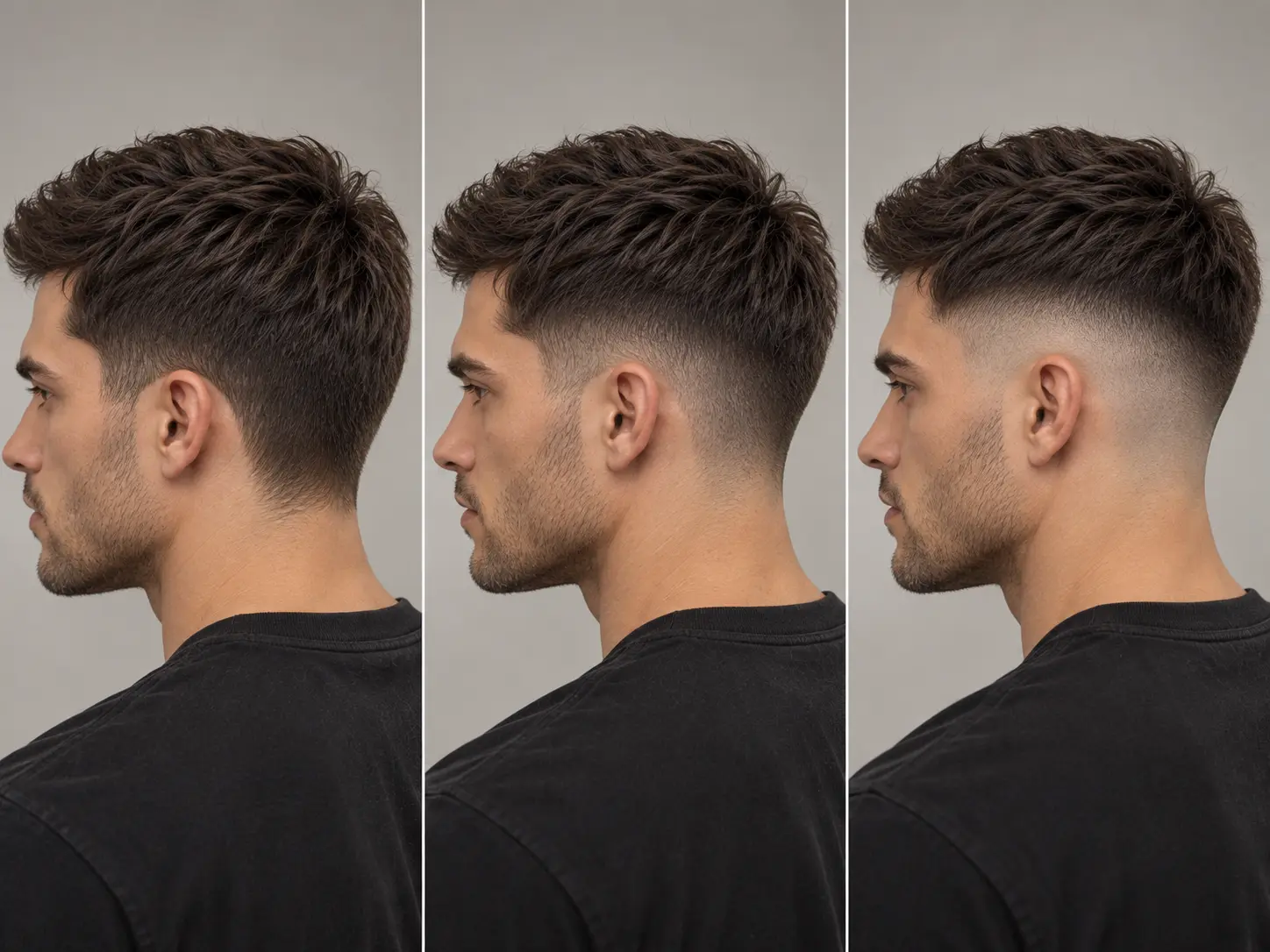
A fade haircut gradually transitions from longer hair to shorter hair along the sides and back. The shortest section may retain visible stubble or expose the scalp completely.
Barbers use different clipper guards, blade adjustments, and controlled movements to create a smooth blend. For example, a #3 guard leaves approximately 10 mm of hair, while a #1 guard leaves around 3 mm.
Modern fades have strong roots in Black American barbering traditions, particularly styles associated with the 1980s hip-hop era. Today, they complement buzz cuts, textured crops, pompadours, quiffs, and curly hairstyles.
Step 2: Choose the Right Fade Height
The position of the fade determines much of its overall appearance.
Low Fade
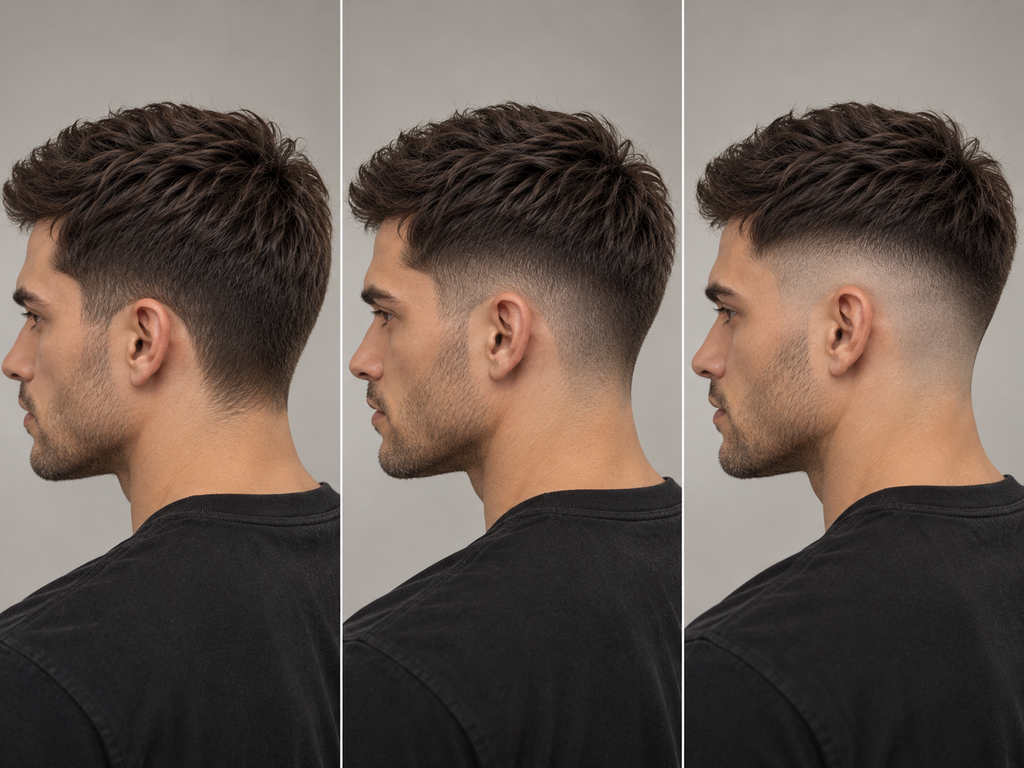
A low fade begins close to the ears and neckline, preserving more hair along the upper sides. It creates a subtle, polished appearance and pairs well with side parts, textured crops, and longer hairstyles.
Mid Fade
A mid fade starts approximately around temple level, offering balanced contrast between the longer top and shorter sides.
It works particularly well with textured crops, comb-overs, and short quiffs.
High Fade
A high fade begins farther up the sides, leaving a larger area closely cropped. It creates stronger contrast and is frequently paired with buzz cuts and structured hairstyles.
Drop Fade
A drop fade follows a curved transition descending behind the ears toward the neckline. It complements curly, coily, and dense hair while retaining some fullness toward the back.
Skin Fade and Burst Fade
A skin fade reduces the shortest section to bare scalp and can be combined with low, mid, or high placement.
A burst fade creates a semicircular transition around the ear, making it particularly suitable for mohawks, mullets, and textured tops.
Step 3: Compare Fades, Tapers, and Taper Fades
Although the terms are sometimes used interchangeably, their cutting patterns differ.
A taper generally concentrates gradual shortening around the sideburns and neckline. A fade usually covers a broader section of the sides and back.
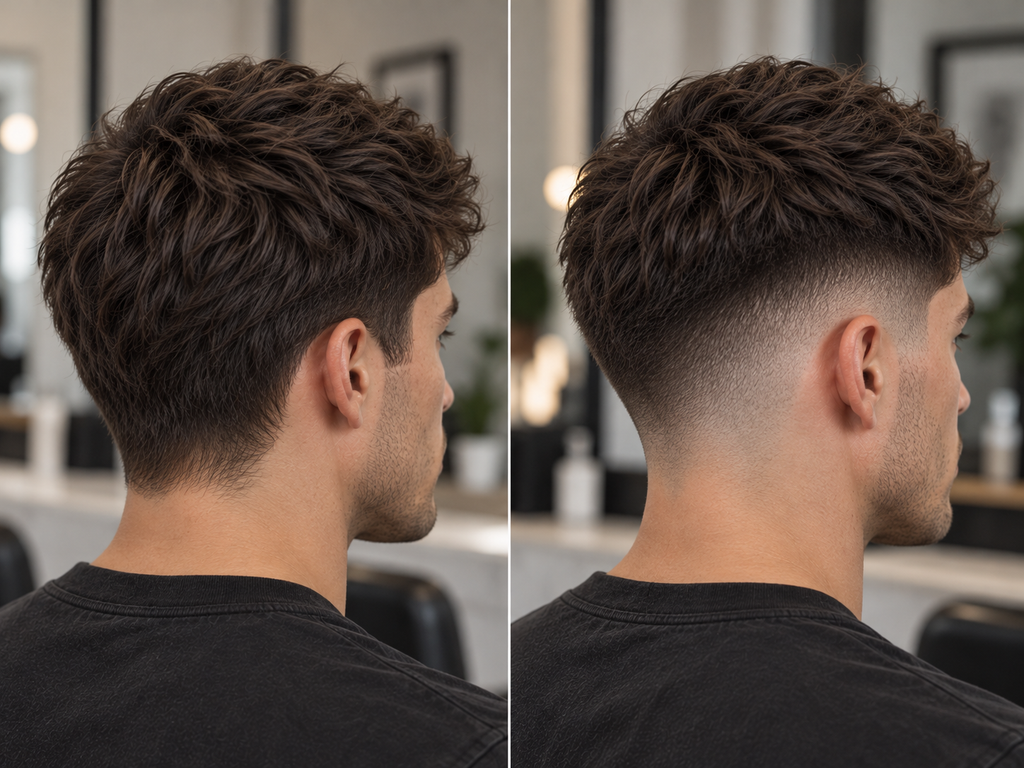
A taper fade combines close blending with a relatively understated transition, although terminology varies between barbershops.
Not every fade reaches bare skin. Only a skin fade specifically requires that finish.
Step 4: Explore Fade Haircut Styles With Facefy
Before committing to a fade haircut, Facefy provides a useful starting point for exploring how different hairstyle silhouettes might complement your features.
You can compare short crops, longer quiffs, textured tops, and other hairstyle directions before deciding which look to discuss with your barber.
This helps you consider the entire haircut rather than focusing only on the fade height.
Virtual hairstyle previews should be treated as inspiration because natural texture, density, head shape, and barbering techniques influence the finished result.
Step 5: Match Your Fade to Your Face Shape
Face shape can help guide fade height, top volume, and side length, although it should not determine your haircut entirely.
Round faces may benefit from mid or high fades paired with additional height on top.
Oval faces generally accommodate low, mid, high, and drop fades. Square faces can work with low or mid fades and textured tops.
Longer faces may prefer low fades with moderate crown volume. Heart-shaped faces can experiment with low or drop fades that preserve side fullness, while diamond-shaped faces may suit softer transitions.
These are styling suggestions rather than strict rules. Hair density, growth direction, and personal preference remain important.
Step 6: Consider Your Hair Texture
Different textures influence how a fade looks and how much styling the top requires.
Straight hair makes blending lines more visible, making precise clipper work important. Low and mid fades pair naturally with textured crops and side parts.
Wavy hair provides natural movement. Low, mid, and drop fades can reduce side bulk while preserving waves.
Curly and coily hair offers flexibility for rounded tops and structured cuts. Your barber should consider shrinkage when determining the final length.
Fine or thinning hair may benefit from a softer fade that preserves coverage, although some people prefer stronger contrast with a short buzz cut.
Step 7: Preview Your Preferred Hairstyle With Facefy
Once you have narrowed down your fade height, consider how the top hairstyle will complete the overall look.
Facefy offers a practical way to explore hairstyle directions using your photo before visiting your barber. Its AI hairstyle finder can help you compare different haircut ideas and prepare clearer visual references.
For example, you might explore whether a textured crop, short quiff, or longer side-parted style better matches your preferred appearance.
Remember that virtual previews are estimates. Actual results depend on your hair characteristics and the cutting technique used.
Step 8: Tell Your Barber Exactly What You Want
Clear instructions help your barber understand your preferred fade.
Start by specifying whether you want a low, mid, high, drop, or burst fade.
Next, explain how short the lowest section should be. You might request a #1 guard instead of bare skin for a softer appearance.
Describe the hairstyle on top, including its length, texture, fringe, and styling direction.
Bring reference photographs showing the front, sides, and back. Discuss neckline shape, sideburns, and whether you prefer sharp or natural edges.
Step 9: Style Your Fade Haircut at Home
The faded sections generally require little styling. Most products are applied to the longer hair on top.
Matte clay adds texture and separation, while styling cream provides flexible control for waves and curls.
Pomade creates a smoother finish for side parts and slicked-back hairstyles. Lightweight mousse can add volume without excessive buildup.
Begin with a small amount of product and distribute it evenly. Avoid heavy application, particularly on fine hair.
Step 10: Maintain Your Fade Between Appointments
Skin fades may show noticeable regrowth after approximately one week, while softer low fades can retain their appearance longer.
Many people schedule maintenance every two to three weeks. Low fades with softer transitions may remain satisfactory for three to four weeks or longer.
Wash according to scalp needs, condition longer sections when necessary, and use lightweight moisturizer if exposed scalp becomes dry.
Limit home touch-ups to isolated stray hairs around the neckline and sideburns. Recreating the full fade without experience can produce visible lines.
Popular Fade Haircut Combinations for 2026
A buzz cut with a high skin fade creates a short, defined silhouette requiring minimal daily styling.
A textured crop with a mid fade provides balanced contrast and works well with straight or wavy hair.
A curly top with a low drop fade preserves natural volume while keeping the sides controlled.
A faux hawk with a mid or high fade emphasizes longer central sections.
A taper fade with a side part offers a more understated, structured appearance suitable for many professional environments.
Common Fade Haircut Mistakes to Avoid
Avoid choosing a fade height without considering how much hair will be removed.
Do not assume every fade requires an exposed scalp. Specify the shortest guard length you prefer.
Choose reference photographs featuring hair textures similar to yours, and avoid aggressive DIY blending that may create uneven transitions.
Finally, select a hairstyle that fits your actual styling routine rather than choosing solely based on appearance.
Final Thoughts
A fade haircut is a flexible cutting technique that complements numerous hairstyles and hair textures.
Low fades provide subtle blending, mid fades offer balanced contrast, and high or skin fades create stronger definition.
Choose your preferred fade height, shortest length, and top hairstyle before visiting your barber. With clear references and appropriate maintenance, the result can remain polished and manageable as it grows.
Also READ
- https://punssmile.com/how-to-prevent-costly-home-plumbing-repairs/
https://punssmile.com/what-high-payouts-and-instant-withdrawals-reveal-about-online-gambling-culture/
https://punssmile.com/how-to-dry-your-hair-without-unnecessary-damage/