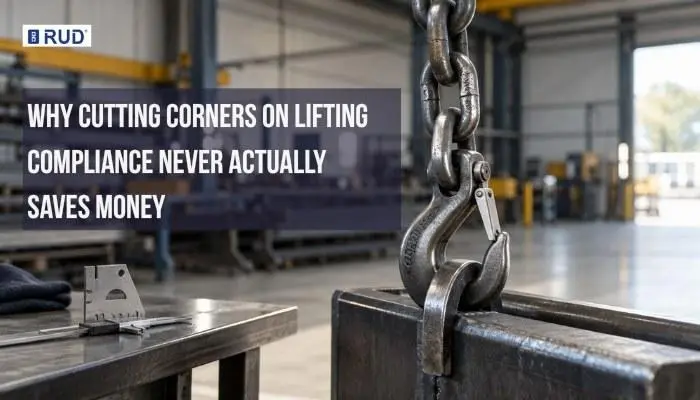
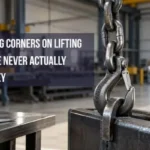
You can’t save money by cutting corners on lifting equipment compliance because the costs don’t disappear. They simply show up somewhere else, usually as enforcement penalties or the costs of dealing with equipment failure.
And it’s understandable why a business owner might try to reduce those upfront costs. When budgets are tight, paying less for an inspection or choosing cheaper lifting equipment can seem like a sensible way to reduce expenses. But those apparent savings can quickly become much higher costs when defects go unnoticed, or compliance issues halt operations.
That’s why we put together this guide at RUD Australia. We’ll break down where those hidden costs come from and why getting compliance right saves money in the long run.
Skipping Lifting Compliance Costs More Than It Saves
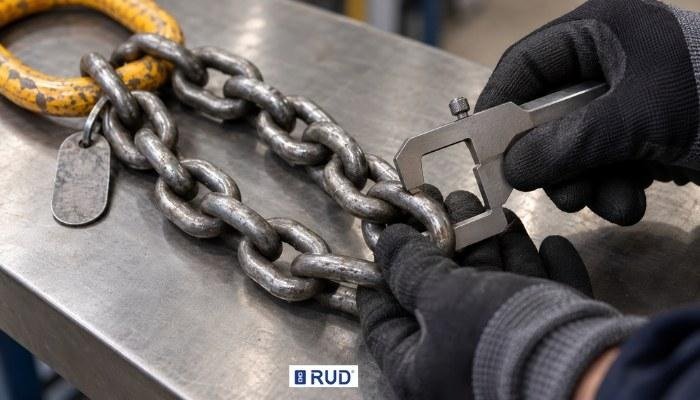
An inspection, a proof test, or a compliant replacement all cost money upfront. Skip one, and you might save money today, but the cost can show up later in repairs, replacement, or downtime.
Take a business that skips an inspection and keeps using lifting gear with an unnoticed defect. The defect leads to failure. Now the business is looking at emergency repairs or a full replacement, plus every hour of lost operating time while the job sits idle.
Not every missed inspection ends this way. But when it does, the downstream cost can dwarf whatever was saved at the start.
And the exposure doesn’t stop at equipment. Non-compliance can bring regulatory action too, which we’ll get into next.
Non-Compliance Can Lead to Enforcement Costs and Downtime
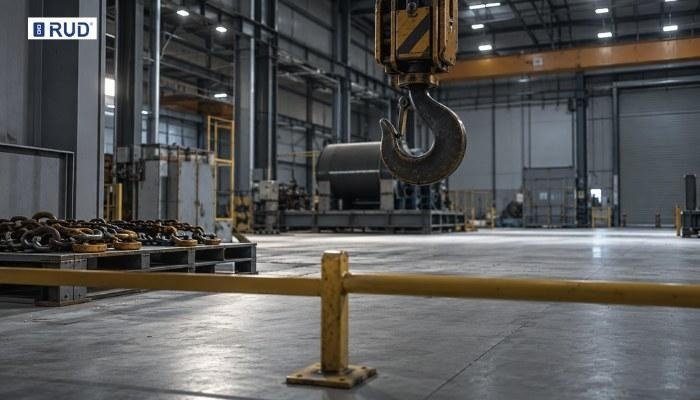
Work health and safety (WHS) laws require businesses to manage risks and keep their workers safe. Failing to meet those duties can lead to enforcement action, even when nobody is injured. A Queensland crane hire company found this out when a 1.3-tonne counterweight came loose and fell during tower crane assembly.
No one was injured, but the company was fined $45,000 for failing to meet its health and safety duty. And the fine was only one part of the cost. When work is stopped to deal with a safety issue, workers, equipment, and dependent jobs can all sit idle. Those lost hours add to the financial impact of the original compliance failure.
In other words, the cost isn’t limited to what the regulator charges. You also pay for the work you can’t do while the problem is being resolved.
Cheap Inspections Aren’t Necessarily Effective Inspections
In Australia, lifting equipment inspections need to be carried out by someone with the right knowledge and skills for the job. The cost varies by equipment and inspection scope, but even a basic inspection can cost around $25 to $35 per item.
A cheaper service might look like an easy way to cut that cost. But if the inspection is rushed or limited to a basic visual check, you aren’t getting the same level of assessment.
A proper inspection looks for wear, damage, deformation, corrosion, and other defects that aren’t always obvious at a glance. Depending on the equipment and the inspection required, it might also involve more detailed testing.
So the cheaper inspection isn’t necessarily the cheaper option. Saving a few dollars upfront isn’t much of a saving if a missed defect later leads to equipment failure, repair costs, or replacement.
Uncertified Lifting Equipment: Skipping the Checks That Catch Problems Early
You can see the difference between a rushed inspection and a proper one when you look at the equipment itself. Take a chain sling. It falls under AS 3775, the Australian Standard covering the design, manufacture, and use of chain slings for lifting.
The standard sets requirements for how chain slings are made, used, and inspected. Following those inspection requirements helps identify wear, damage, deformation, and other problems before they affect the sling’s safe use.
Without the right inspection records, a business has less evidence of the sling’s condition and inspection history. It might look fine and still be in use, but you don’t have the same assurance that problems haven’t developed since the last check.
However, many businesses focus on the upfront price of an inspection without asking what the inspection actually covers. We’ve seen this lead to problems when a cheaper inspection fails to catch an issue early.
Regular Testing Costs Less Than Emergency Repairs and Downtime
Routine testing gives you a predictable cost and lets you plan for maintenance as part of your normal operating budget. When testing identifies a problem early, you can address it before it leads to costs such as:
- Emergency repair or replacement
- Unplanned equipment downtime
- Delayed jobs and lost productivity
- Extra labour or call-out costs
- Potential damage to other equipment or property
That’s why routine testing helps keep lifting equipment costs under control. You deal with problems before they cause a wider disruption instead of paying for the consequences later.
Getting Compliance Right the First Time
Good lifting compliance starts with treating inspections, testing, and documentation as part of normal equipment management. Keeping those checks up to date gives you a clearer picture of your equipment. It also helps you deal with problems before they disrupt your work.
If your lifting equipment is due for a check, RUD Australia can help you get ahead of it. Get in touch to find out more.
Frequently Asked Questions
The right approach to lifting equipment also involves understanding the risks around its use. Here are some common questions about risk assessment, control measures, and safe work practices.
What control measures can improve lifting safety?
Control measures can include equipment checks, safe operating procedures, worker training, supervision, and mechanical aids. The right measures depend on the hazards identified during a risk assessment.
When should a risk assessment be completed for lifting work?
Complete a risk assessment before starting lifting work and whenever the work environment, equipment, loads, or work tasks change. This helps identify hazards and select suitable control measures.
Do construction sites need safe work method statements for lifting work?
Some high-risk construction work requires a safe work method statement (SWMS). Where required, it should explain the hazards, control measures, and safe procedures for the work being performed.
How do Australian Standards support lifting equipment safety?
Australian Standards provide technical guidance for the safe design, selection, use, and inspection of equipment. Following relevant standards can help businesses manage risks and maintain a safer work environment.
What regulations apply to lifting equipment in Australian workplaces?
Employers must follow work health and safety regulations and relevant safety standards when managing lifting equipment. This includes maintaining systems for inspection, keeping equipment safe to operate, and protecting workers from injuries caused by faulty plant.
Also Read
- how-to-avoid-high-costs-of-forming-a-new-company/
- /why-the-oldest-magic-cards-play-by-completely-different-rules/
- /smarter-commercial-construction-planning-for-successful-project-delivery/








1 thought on “Why Cutting Corners on Lifting Compliance Never Actually Saves Money”