Anxiety has a bad reputation for a good reason. It can make your chest tighten, your thoughts race, and your to do list feel like a threat instead of a plan. Most people learn to think of anxiety as a flashing red light that means, “Back away.” But sometimes anxiety is not actually telling you to quit. Sometimes it is pointing at the exact area of life that needs your attention.
Anxiety Is Not Always Telling You to Stop
That shift matters, especially when the thing you are avoiding keeps growing in your mind. An unopened bill, an uncomfortable conversation, a delayed doctor appointment, or a pile of financial stress can become mentally larger every day you leave it untouched. In moments like that, taking one concrete step, whether that means reviewing your budget or exploring credit card debt relief, can interrupt the cycle. Anxiety often feeds on vagueness. Action gives your brain something specific to do.
Avoidance Feels Good, Until It Doesn’t
Avoidance works fast, which is why it becomes such a powerful habit. If you are nervous about checking your bank balance and you decide not to look, you may feel relieved for a few minutes. If you are anxious about sending an email and you put it off until tomorrow, your body gets a short break. That immediate relief teaches your brain an important lesson, even if it is the wrong one: avoidance equals safety.
The problem is that your brain keeps score. The next time the same situation comes up, it remembers that you escaped and survived, so it pushes you to escape again. Over time, the fear gets stronger, not weaker. The task itself may not change, but your relationship to it does. What was once mildly uncomfortable can start to feel impossible.
This is one reason anxiety can quietly shrink your life. Not all at once, but inch by inch. You stop doing the hard thing, then the slightly hard thing, then eventually even thinking about the subject starts to make you uneasy.
The Real Goal Is Not Calm First
A lot of people believe they need to feel calm before they can act. That sounds reasonable, but anxiety rarely works that way. If you wait until you feel no discomfort, you may wait a very long time.
A more useful goal is to act while anxious, but in a manageable way. That is different from forcing yourself into a panic. It means making the next step small enough that your nervous system can tolerate it. This approach lines up with what mental health experts describe as healthy coping and gradual behavior change. The National Institute of Mental Health notes that stress and anxiety can lead people to avoid doing things, and that coping strategies, support, and treatment can help when symptoms interfere with daily life. The National Institute of Mental Health’s guidance on stress and anxiety offers a clear overview of that pattern.
This is where anxiety can become surprisingly useful. Instead of asking, “How do I make this feeling disappear?” you can ask, “What is this feeling asking me to face, in the smallest possible dose?”
Use Anxiety as a Highlighter
Think of anxiety less like a stop sign and more like a highlighter. It tends to mark the places where uncertainty, risk, or vulnerability live. That does not mean every anxious thought is accurate. It does mean the feeling is often attached to something meaningful.
You might feel anxious because your finances have become disorganized, because your relationship is overdue for honesty, or because your workload has crossed a line from busy to unsustainable. In those cases, anxiety is miserable, but it is not random. It is drawing your attention to a problem that avoidance cannot solve.
That perspective can help reduce shame. You are not lazy because you have been avoiding something. You are probably stuck in a very human loop where relief in the short term creates more distress in the long term.
Small Actions Retrain the Brain
The brain learns from experience, not pep talks. You can repeat “I’m fine” all day, but if you never approach the thing you fear, your brain keeps categorizing it as dangerous.
Small action changes that. When you face a stressful task in a gradual, realistic way, you create new evidence. You look at the statement. You make the phone call. You open the calendar. You have the awkward conversation. Nothing magical happens in that moment, but something important does. Your brain begins to learn that discomfort is survivable.
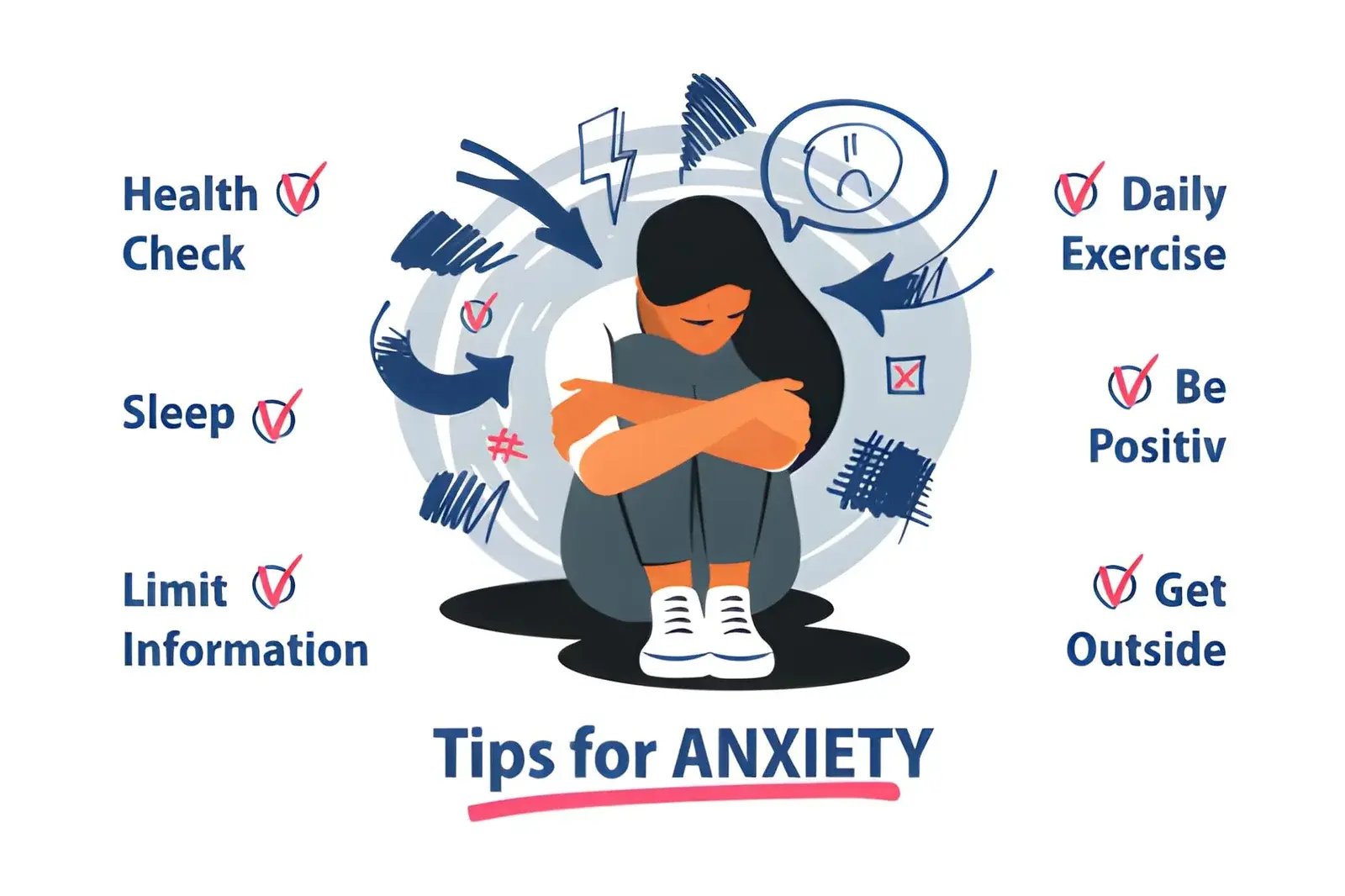
Public health guidance on stress management often emphasizes daily habits and small coping steps because they create stability over time. The CDC recommends practical strategies such as sleep, movement, taking breaks, connecting with others, and finding healthy ways to cope with ongoing stress. The CDC’s stress management resources reinforce the idea that manageable, repeated actions can protect mental and physical health.
Notice what this means. Progress is not the absence of anxiety. Progress is building proof that anxiety does not get the final vote.
Make the Task Smaller Than Your Fear
One of the most effective ways to move from avoidance to action is to make the task laughably specific.
- Do not tell yourself to “fix your finances.” Tell yourself to log in to one account.
- Do not tell yourself to “get healthy.” Tell yourself to walk for ten minutes.
- Do not tell yourself to “deal with stress.” Tell yourself to write down the three things that are bothering you most.
When a task is too broad, anxiety fills in the blanks with catastrophe. When a task is precise, your brain can engage with reality instead of dread.
A good rule is this; if you keep postponing something, the step is probably still too big. Shrink it again. Action counts even when it looks unimpressive from the outside.
Build Friction Against Avoidance
Because avoidance is so rewarding in the moment, it helps to make it a little less automatic.
You can do that by setting up structures before anxiety spikes:
- Put the phone number you need in your notes app.
- Schedule the task for a specific time instead of “later.”
- Sit with a friend while you do the thing you have been putting off.
- Write a two sentence script for a hard conversation.
- Set a ten minute timer and stop when it ends.
These tools are not signs of weakness. They are ways of reducing the energy it takes to begin. For anxious people, beginning is often the hardest part.
Action Builds a Wider Life
The hidden cost of avoidance is not just unfinished tasks. It is a smaller life. Fewer risks. Fewer conversations. Fewer chances to prove to yourself that you can handle what is hard.
Action does the opposite. It expands your range. It tells your nervous system, over and over, “We can do uncomfortable things without collapsing.” That message builds confidence in a deeper way than positive thinking ever could.
The goal is not to become fearless. It is to become responsive instead of avoidant. To let anxiety be a signal, not a prison.
So the next time anxiety shows up, try asking a different question. Not “How do I get rid of this right now?” but “What small action would make this feeling a little less in charge?” That is often where momentum begins. Not with perfect calm, but with one honest step toward the thing you have been avoiding.
Also Read
- why-the-oldest-magic-cards-play-by-completely-different-rules/
- professional-linkedin-banner-designs-for-recruiters-and-hr-experts/
- why-the-best-recurring-plans-rotate-tasks-instead-of-repeating-the-same-checklist/